Egyptian revolutionary is released
The Egyptian state faced pressure to release a well-known lawyer, reports .
HAITHAM MOHAMEDEIN, an Egyptian labor lawyer and well-known member of the Revolutionary Socialists, was released from detention late on September 7 without any charges filed against him following a campaign of pressure organized inside and outside Egypt.
But left-wing journalists and activists are continuing to raise their voices against threats that the military rulers of the country will widen their ongoing crackdown on dissent.
Mohamedein was arrested last Thursday, September 5, outside of Suez. He was traveling to the city by bus to meet with representatives of unions and labor organizations. He was detained in a Suez police station, and on Friday ordered held without charge for another four days.
On Saturday, according to the Daily News Egypt, Mohamedein was interrogated before the Supreme State Security Court of Emergency. Ramy Ghanem, who was one of the lawyers present, said the accusations against Mohamedein were all political, ranging from "forming a secret organization which aims at shifting the structure of society, to incitement and assistance to subvert public institutions, harming social peace," among others, he told the Daily News.
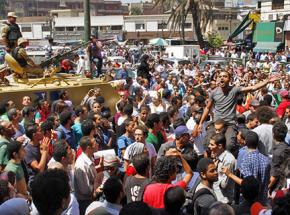
Ahram Online reported that police seized documents from Mohamedein when they arrested him, and this was put forward as evidence. Documents included a sketch of march routes for the June 30 demonstrations, during which millions of Egyptians marched against former President Mohamed Morsi of the Muslim Brotherhood, setting the stage for the military to step in and remove Morsi. Mohamedien was a well-known organizer of the day of protests that marked the culmination of the Tamarod (Rebellion) petition campaign calling on Morsi to resign.
According to Ghanem, Mohamedein was released without charge, but he could be summoned to return to court if prosecutors choose to file formal allegations against him.
In a statement released via Facebook, Mohamedein said, "I would like to thank all the revolutionaries and comrades in Egypt for their solidarity. All credit for the liberation of all those arbitrarily detained goes to you...I am confident we will not be bullied by repression."
ON SEPTEMBER 7, according to an Ahram Online report, hundreds of people gathered in front of the prosecutor general's office in downtown Cairo to demand Mohamedein's release. The protest was called by the Revolutionary Socialists, along with members of the April 6 Youth Movement, the Egyptian Current Party and other revolutionaries, including well-known blogger and activist Alaa Abdel-Fatah and television journalist Reem Maged.
Another demonstration in solidarity with Mohamadein was held in front of the main courts building in Egypt's second largest city of Alexandria.
In Cairo, after rallying for Mohamedein, the demonstrators moved to the nearby Journalists Syndicate offices to call for the released of award-winning reporter Ahmed Abou Deraa. According to Ahram Online, Deraa "was referred to military prosecution [on the same day as Mohamedein was arrested] and given 15 days in detention, pending investigations on charges of broadcasting false information about the military, communicating with 'terrorist groups' in Sinai, filming military property and provoking the armed forces."
Meanwhile, international activists mobilized behind a support campaign organized by the Mena Support Network.
Mohamedein's arrest symbolizes the spreading crackdown carry about by the military since its ouster of Mohamed Mori. As the Mena network wrote in its appeal for solidarity, Mohamedein "was at the forefront of the massive protests against Mohamed Morsi on June 30, but has also been one of the few voices condemning the military's crackdown and the killing of hundreds of Muslim Brotherhood supporters since the army takeover."
The military has been able to improve its image--marred during its year and a half of direct rule following the downfall of Hosni Mubarak in February 2011--by demonizing the Brotherhood following Morsi's downfall, enabling it to carry out the arrest of numerous leading members amid brutal armed attacks on Brotherhood protests. But this has been what Egyptian revolutionaries recognize as a drive against all opponents.
The repression itself could spark anger and a return to large protests--especially if the regime continues to target the country's labor movement, as it clearly did with Mohamedein's arrest. As the Guardian reported:
Thousands of Egyptians--some of them represented by Mohamedein--have been on strike in recent weeks in the industrial cities of Suez and Mahalla in protest at poor conditions, and the government is concerned that the strikes might spread. Strikes played a key role in the downfall of Hosni Mubarak in 2011, and were a destabilizing force during the final months of Morsi's tenure.